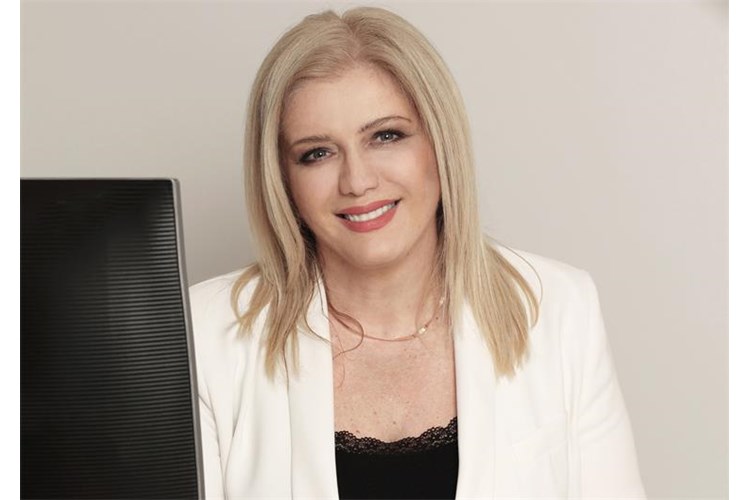
Interview with Lidija Brković in anticipation of International Women’s Day
On the occasion of International Women's Day, we spoke with Lidija Brković, Acting Director General of the Croatian Bureau of Statistics, only the second woman to be at the head of this institution in the 150-year long history of Croatian statistics. Find out what it means to lead a predominantly female team, how generations of women have contributed to the development of statistics, and how statistical data affect the position of women in society.
What does it mean to be a woman at the head of an institution, and do you feel additional responsibility just because you are a woman?
Being the head of an institution is a great privilege for me, with the full awareness that this kind of leadership leaves a mark. I do not see it as a burden, but as an opportunity to show that expertise, openness and cooperation can be combined into effective leadership. I do feel responsibility, but not because I am a woman, but because I am the head of an institution of public interest. And if my example can empower other women - I see it only as an added value, not as pressure.
What part of a director’s job is “invisible”, but actually crucial?
Leading such a large team is not an easy task, and I think that a good manager should first and foremost be a good psychologist. Listening, understanding people, individual approach, and the ability to recognise and extract the maximum potential of each of them are the keys to success, as well as understanding that leadership is a marathon, not a sprint. This role requires a lot of patience because the effects of some decisions are not immediately visible, but they make a difference in the long run. If I had to single out one invisible wheel, it would be the analyses and assessments that precede each decision and are crucial for the decisions to be correct. It is a process that is not visible on the outside.
Is there a woman who has inspired you and helped you on your professional journey, and how do you reciprocate that support today?
I am surrounded by women both privately and professionally. I have four sisters, and I have had the opportunity to witness the beauty and strength of the female team within my own family, and to develop an awareness of how much that support and understanding mean. My professional journey was also accompanied by many women who believed in me, perhaps even before I fully believed in myself. Today, I reciprocate that support by opening space for others, encouraging their development, and never forgetting how much encouragement at the right moment means.
When we talk about generations of statisticians - how have women contributed to the profession?
The Croatian Bureau of Statistics has top experts, both female and male, so it may be inappropriate to single out anyone. However, if I had to single out women, I would say that, in addition to their analytical precision, a high level of organisation and the ability to multitask, they are also distinguished by the ability to see the bigger picture and focus on details. It is important to emphasize that these are not exclusive differences, but tendencies that are recognised in practice. However, the winning combination is essentially a synergy of different work styles and skills.
Three quarters of employees of the Croatian Bureau of Statistics are women. What does it look like to lead a predominantly female team?
I don’t look at my team leadership through the prism of gender, but through professionalism, knowledge and responsibility of the people I work with. The Croatian Bureau of Statistics is a very dynamic environment full of daily communication. It is important to have clear goals and defined roles, and it is precisely this combination - open dialogue and clearly set frameworks - that allows for the greatest efficiency of the system as a whole, regardless of whether the majority is women or men.
Is there a moment in your career when you particularly felt the power of female solidarity?
Yes, in the moments of great professional challenges, when support was not formal, but humane. Then you realise how much a network of trust means. These gestures are not loud, but quiet, and are reflected in taking over a part of the burden when it is most needed. That's when female sensibility and our ability to recognise these moments, to selflessly help and jointly assume responsibility for the public role we have, enter the scene.
Is there any advice you wish you had received sooner?
The beauty of professional development and progress lies precisely in the fact that there is no manual and that we do not have all the answers. You do not have to know everything in advance. Growth comes through experience, not perfection.
When it comes to gender equality, how do statistics help to theorise less and act more in practice?
Statistics provide facts. When you have data, the discussion ceases to be abstract, and decisions become measurable and responsible. Data clearly, unambiguously show where differences exist, thereby creating a solid foundation and arguments for specific measures.
A message to women considering a career in data, what is more important - the knowledge of math and statistics or curiosity and courage?
Curiosity and courage. You can learn mathematics, and upgrade your technical knowledge, but the questions of why and how drive the whole story. Of course, mathematics is important, it is the foundation of the profession, but it is not the only prerequisite for a successful career in the field of data and statistics. Without internal motivation and interest, it is difficult to maintain professional energy in the long term. Curiosity is what drives learning, and in a field that is constantly changing in terms of methodology and content, the willingness to continuously acquire new knowledge is crucial.
News